Views: 5
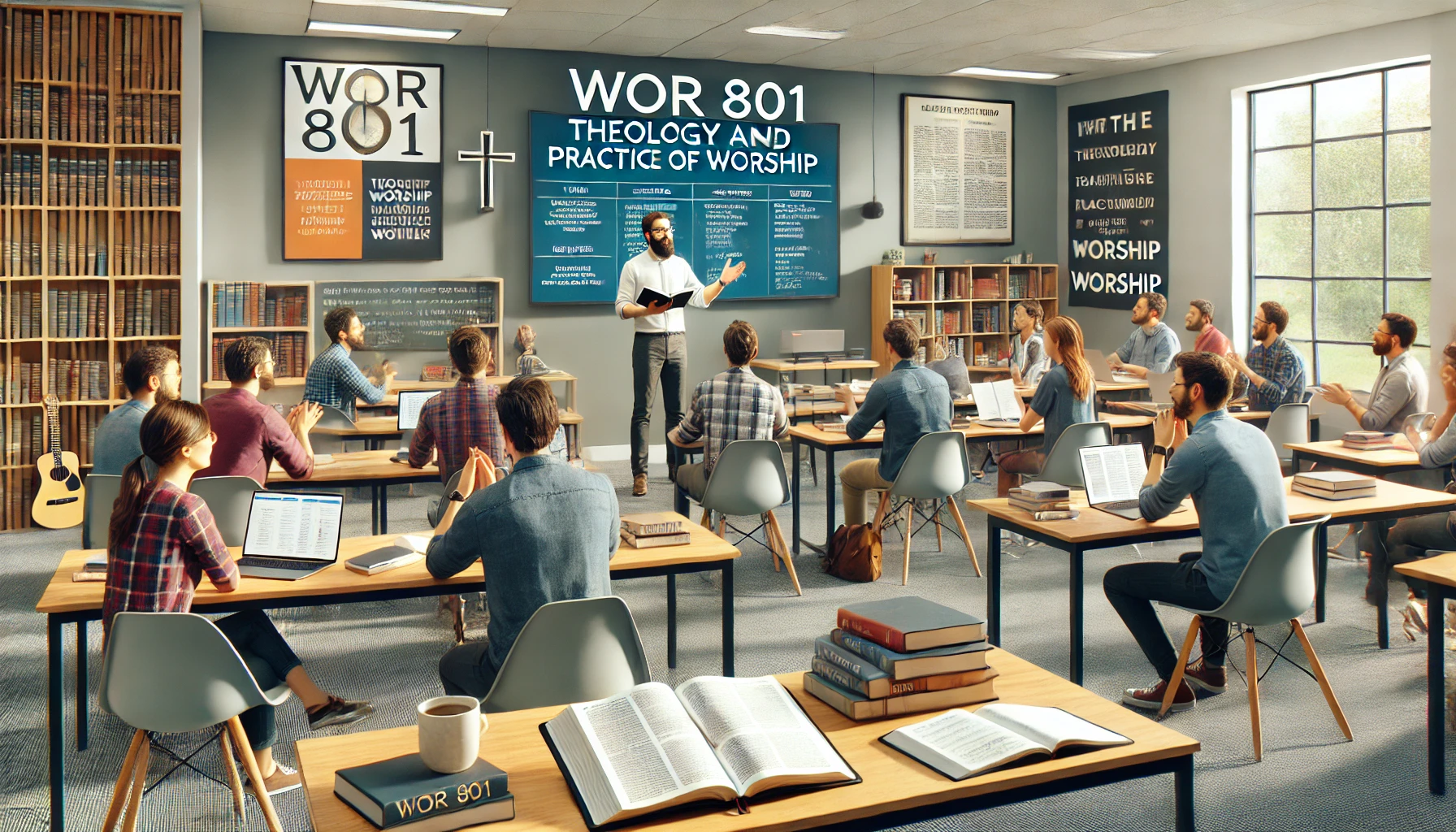
Course Title: WOR 801: Theology and Practice of Worship
Subtitle: Deepening Worship Through Theological Understanding
Course Name & Level: Theology and Practice of Worship, Doctoral Level
Number of Credit Hours: 3 Credit Hours
Keywords: Worship Theology, Worship Practice, Biblical Worship
Introduction:
This course explores the theology and practice of worship, emphasizing a deep understanding of biblical principles and their application in worship settings. Students will develop skills to lead worship with theological insight and practical expertise.
Course Description:
WOR 801 delves into the theology of worship, providing a comprehensive study of biblical foundations and historical developments. The course equips students with practical skills to lead worship that is theologically sound and spiritually enriching.
Course Purpose:
To equip students with advanced knowledge and skills in the theology and practice of worship, fostering a deeper worship experience rooted in biblical truth.
Course Objectives:
To develop proficiency in understanding and applying theological principles to worship practices, enhancing the spiritual depth and authenticity of worship experiences.
Key Terms Defined & Key Concepts Explained:
- Worship: The act of showing reverence and adoration for God, guided by biblical principles (John 4:24).
- Theology of Worship: The study of the nature and purpose of worship based on biblical teachings (Psalm 95:6).
- Liturgical Practices: The forms and rituals used in worship services, influenced by theological understanding (Isaiah 6:1-4).
- Sacred Music: Music used in worship that reflects and enhances theological truths (Colossians 3:16).
- Corporate Worship: The collective act of worship by a congregation, emphasizing community and unity (Hebrews 10:24-25).
Specific Topics with Descriptions:
- Biblical Foundations for Worship:
Exploring the scriptural basis for worship, emphasizing its significance in the Bible (Psalm 100:2). - Historical Development of Worship Practices:
Studying the historical evolution of worship practices from ancient Israel to the modern church (Acts 2:42-47). - Theology of Worship:
Understanding the theological principles that underpin worship practices, focusing on God’s nature and attributes (Revelation 4:11). - Liturgical Theology:
Examining the role of liturgy in worship, including the structure and elements of worship services (Isaiah 6:1-8). - Worship and the Arts:
Integrating arts into worship, exploring how visual arts, music, and drama enhance the worship experience (Exodus 31:1-5). - Sacred Music in Worship:
Analyzing the role of music in worship, including hymnology, contemporary worship music, and psalmody (Ephesians 5:19). - Leading Worship:
Practical skills for leading worship services, including planning, coordination, and leadership techniques (1 Chronicles 15:16-22). - Worship in the Church Calendar:
Understanding the significance of the church calendar in worship, including seasons like Advent, Lent, and Easter (Leviticus 23:1-44). - Cultural Contexts of Worship:
Exploring how cultural contexts influence worship practices and how to adapt worship for diverse congregations (Revelation 7:9-10). - Evaluating Worship Practices:
Assessing and refining worship practices to ensure they are theologically sound and spiritually impactful (Romans 12:1-2).
Assessments with Descriptions:
- Research Paper:
A 15-20 page paper on a selected aspect of worship theology or practice, integrating scriptural references and scholarly research (Psalm 119:105). - Case Study Analysis:
Analyzing a case study involving worship practices, providing biblically-based solutions (James 1:5). - Worship Service Plan:
Creating a detailed plan for a worship service, demonstrating the integration of theological principles and practical elements (1 Corinthians 14:40). - Exams and Quizzes:
Assessing knowledge and understanding of course materials through periodic exams and quizzes (Proverbs 4:7). - Class Participation:
Active engagement in class discussions, demonstrating comprehension and application of worship theology principles (Hebrews 10:24-25).
Research References:
- Peterson, David. Engaging with God: A Biblical Theology of Worship. IVP Academic, 2002. eBook.
- Best, Harold M. Music Through the Eyes of Faith. HarperOne, 1993. eBook.
- Cherry, Constance M. The Worship Architect: A Blueprint for Designing Culturally Relevant and Biblically Faithful Services. Baker Academic, 2010. eBook.
- Ross, Allen P. Recalling the Hope of Glory: Biblical Worship from the Garden to the New Creation. Kregel Academic, 2006. eBook.
- White, James F. Introduction to Christian Worship. Abingdon Press, 2001. eBook.
The course centers on King Jesus, His Kingdom, His Holy Spirit, His Royal Family, and His Great Commission as stated in Matthew 28:18-20.