
Views: 11
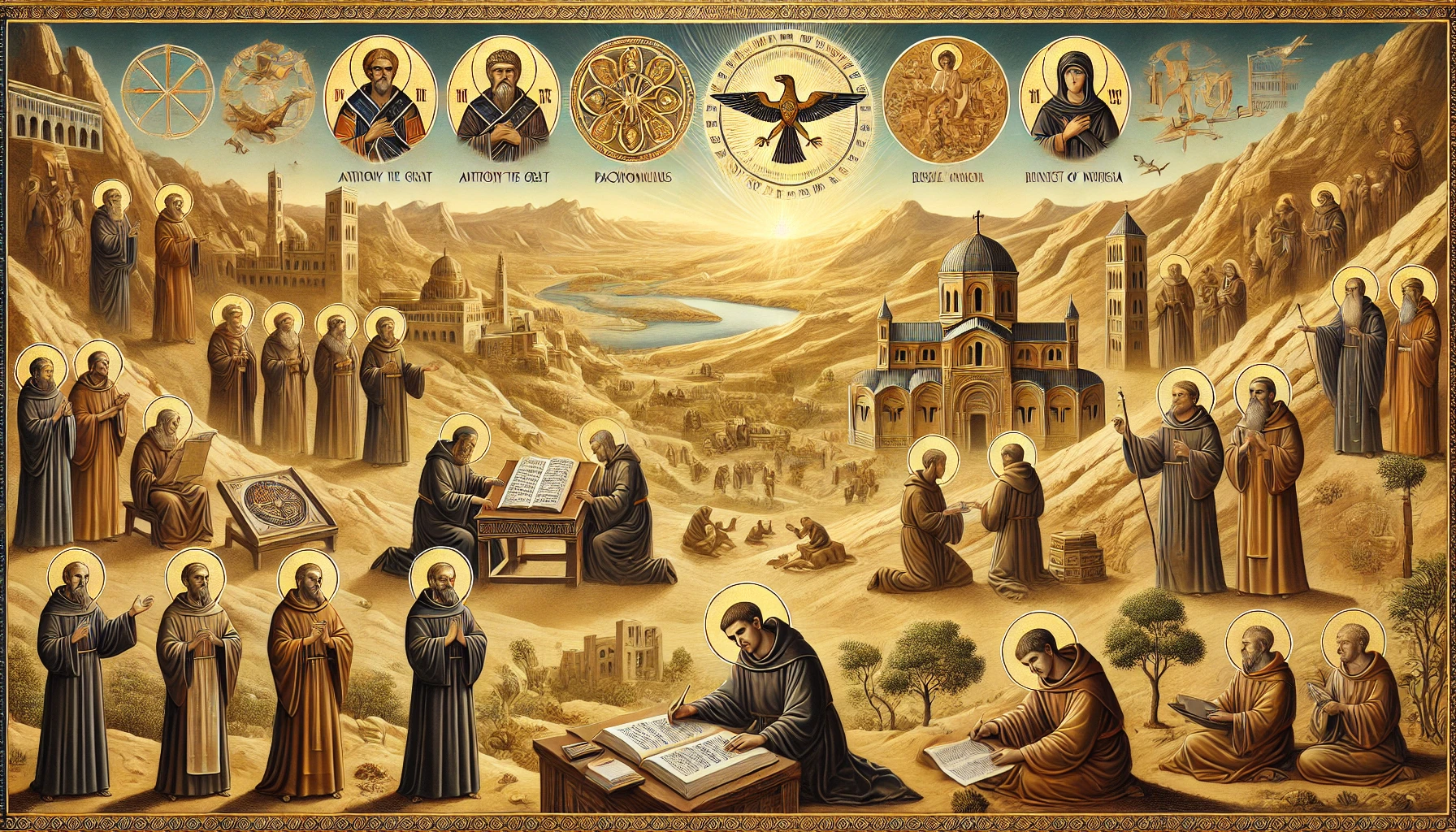
The Role of Monasticism: Examination of the Rise and Influence of Monastic Movements
Level of Education: Doctoral Degree in Biblical Studies
Purpose
To examine the origins, development, and impact of monasticism in early Christianity and its influence on the church and broader society.
Objectives
- Understand the historical context and motivations behind the rise of monasticism.
- Analyze the key figures, movements, and practices within early monasticism.
- Evaluate the influence of monasticism on Christian doctrine, spiritual practices, and societal contributions.
Key Concepts, Terms, and Keywords
- Monasticism: A religious way of life characterized by asceticism and self-denial, often in a community setting.
- Asceticism: Severe self-discipline and avoidance of all forms of indulgence, typically for religious reasons.
- Desert Fathers: Early Christian hermits, ascetics, and monks who lived in the Scetes desert of Egypt.
- Rule of St. Benedict: A set of guidelines for monastic life created by St. Benedict of Nursia.
- Cenobitic Monasticism: Monastic life lived in community rather than in solitude.
- Eremitic Monasticism: Monastic life lived in solitude, often in remote locations.
Lesson Content
1. Historical Context and Rise of Monasticism
- Origins
- Reaction to the perceived laxity of Christian life post-Constantine.
- Desire for a purer, more dedicated spiritual life.
- Early Influences
- Scriptural Basis: Matthew 19:21 – “Jesus said to him, ‘If you would be perfect, go, sell what you possess and give to the poor, and you will have treasure in heaven; and come, follow me.'”
- Example: The influence of John the Baptist and Jesus’ time in the wilderness (Matthew 3:1-4, Luke 4:1-2).
2. Key Figures and Movements in Early Monasticism
- Desert Fathers
- Anthony the Great (c. 251-356 AD)
- Considered the father of monasticism.
- Known for his ascetic lifestyle and spiritual teachings.
- Pachomius (c. 292-348 AD)
- Founder of cenobitic monasticism.
- Established monastic communities with shared rules and communal living.
- Anthony the Great (c. 251-356 AD)
- Basil the Great (c. 330-379 AD)
- Developed guidelines for monastic life that balanced work, prayer, and communal living.
- Influenced Eastern monasticism.
- Benedict of Nursia (c. 480-547 AD)
- Authored the Rule of St. Benedict, which became the foundation for Western monasticism.
- Emphasized stability, community, and prayer.
3. Practices and Spiritual Discipline
- Daily Life in Monastic Communities
- Scriptural Basis: Acts 2:42 – “And they devoted themselves to the apostles’ teaching and the fellowship, to the breaking of bread and the prayers.”
- Example: The Rule of St. Benedict’s division of the day into periods of prayer, work, and study.
- Ascetic Practices
- Fasting, prayer, manual labor, and study.
- Scriptural Basis: 1 Corinthians 9:27 – “But I discipline my body and keep it under control, lest after preaching to others I myself should be disqualified.”
- Communal Living
- Emphasis on obedience, humility, and mutual support.
4. The Influence of Monasticism
- Spiritual and Theological Contributions
- Preservation and copying of manuscripts.
- Development of Christian mysticism and contemplative practices.
- Scriptural Basis: Colossians 3:16 – “Let the word of Christ dwell in you richly, teaching and admonishing one another in all wisdom.”
- Educational and Social Impact
- Establishment of schools, hospitals, and libraries.
- Advocacy for social justice and care for the poor.
- Cultural and Artistic Contributions
- Monastic contributions to art, music, and architecture.
King Jesus’ Model/Example
- Luke 5:16: Jesus often withdrew to lonely places and prayed.
- Explanation: Monasticism emulates Jesus’ practice of solitude and prayer, seeking closer communion with God.
- Matthew 4:1-11: Jesus’ time in the wilderness being tempted by Satan.
- Explanation: The monastic life of solitude and asceticism mirrors Jesus’ example of spiritual discipline and resistance to temptation.
Practical Applications (Bible-Based)
- Spiritual Discipline: Incorporating practices of prayer, fasting, and study into daily life (1 Timothy 4:7-8).
- Community Living: Emphasizing the importance of mutual support, obedience, and humility in Christian communities (Philippians 2:3-4).
- Service and Outreach: Following the monastic example of caring for the poor and advocating for social justice (James 1:27).
Exam Questions and Answers
- Question: What motivated the rise of monasticism in early Christianity? Answer: The rise of monasticism was motivated by a desire for a purer, more dedicated spiritual life in response to the perceived laxity of Christian life after Constantine’s conversion and the increased acceptance of Christianity within the Roman Empire.
- Question: Who was Anthony the Great, and why is he significant in the history of monasticism? Answer: Anthony the Great is considered the father of monasticism. He is significant for his ascetic lifestyle, spiritual teachings, and influence on the Desert Fathers, setting a model for later monastic practices.
- Question: Explain the difference between cenobitic and eremitic monasticism. Answer: Cenobitic monasticism involves communal living under a common rule, emphasizing community life, shared resources, and mutual support. Eremitic monasticism involves living in solitude, often in remote locations, focusing on individual asceticism and personal spiritual growth.
- Question: What are the key elements of the Rule of St. Benedict, and why is it important? Answer: The Rule of St. Benedict emphasizes stability, community, and a balanced life of prayer, work, and study. It is important because it became the foundation for Western monasticism, providing a sustainable and structured approach to monastic life.
- Question: How did monasticism contribute to the preservation of Christian texts and knowledge? Answer: Monasticism contributed to the preservation of Christian texts and knowledge through the diligent copying of manuscripts, the establishment of monastic libraries, and the dedication to scholarly pursuits, ensuring the transmission of theological and philosophical works.
- Question: Describe the impact of monasticism on education and social services. Answer: Monasticism had a significant impact on education and social services by establishing schools, hospitals, and libraries, as well as advocating for social justice, caring for the poor, and providing a model of Christian service and charity.
- Question: What role did the Desert Fathers play in the development of monasticism? Answer: The Desert Fathers were early Christian hermits and monks who lived in the Egyptian desert. They played a crucial role in the development of monasticism by modeling ascetic practices, spiritual discipline, and a life dedicated to prayer and solitude, influencing later monastic movements.
- Question: How did Basil the Great influence Eastern monasticism? Answer: Basil the Great influenced Eastern monasticism by developing guidelines for monastic life that balanced work, prayer, and communal living. His writings and example helped shape the practices and organization of Eastern Orthodox monastic communities.
- Question: In what ways did monasticism contribute to the cultural and artistic heritage of Christianity? Answer: Monasticism contributed to the cultural and artistic heritage of Christianity through the creation of religious art, music, and architecture. Monastic communities produced illuminated manuscripts, chanted liturgies, and built monasteries that became centers of cultural and artistic expression.
- Question: What practical lessons can contemporary Christians learn from the monastic tradition? Answer: Contemporary Christians can learn the importance of spiritual discipline, community living, and service to others from the monastic tradition. Incorporating practices of prayer, fasting, and study into daily life, emphasizing mutual support and humility, and engaging in acts of charity and social justice can enrich personal and communal faith.
Research Citations (MLA Format)
- Chitty, Derwas J. The Desert a City: An Introduction to the Study of Egyptian and Palestinian Monasticism under the Christian Empire. St Vladimir’s Seminary Press, 1995. Available in eBook format.
- Gregg, Robert C. The Life of Anthony: The Coptic Life and the Greek Life. Cistercian Publications, 1980. Available in eBook format.
- Benedict of Nursia. The Rule of St. Benedict. Vintage Spiritual Classics, 1998. Available in eBook format.
- Ware, Timothy. The Orthodox Church. Penguin Books, 1993. Available in eBook format.
- Brown, Peter. The Body and Society: Men, Women, and Sexual Renunciation in Early Christianity. Columbia University Press, 2008. Available in eBook format.
This lesson provides an in-depth examination of the rise and influence of monasticism in early Christianity, highlighting the contributions of key figures and movements, the practices of monastic communities, and the lasting impact of monasticism on Christian doctrine, spiritual practices, and societal contributions.