Views: 13
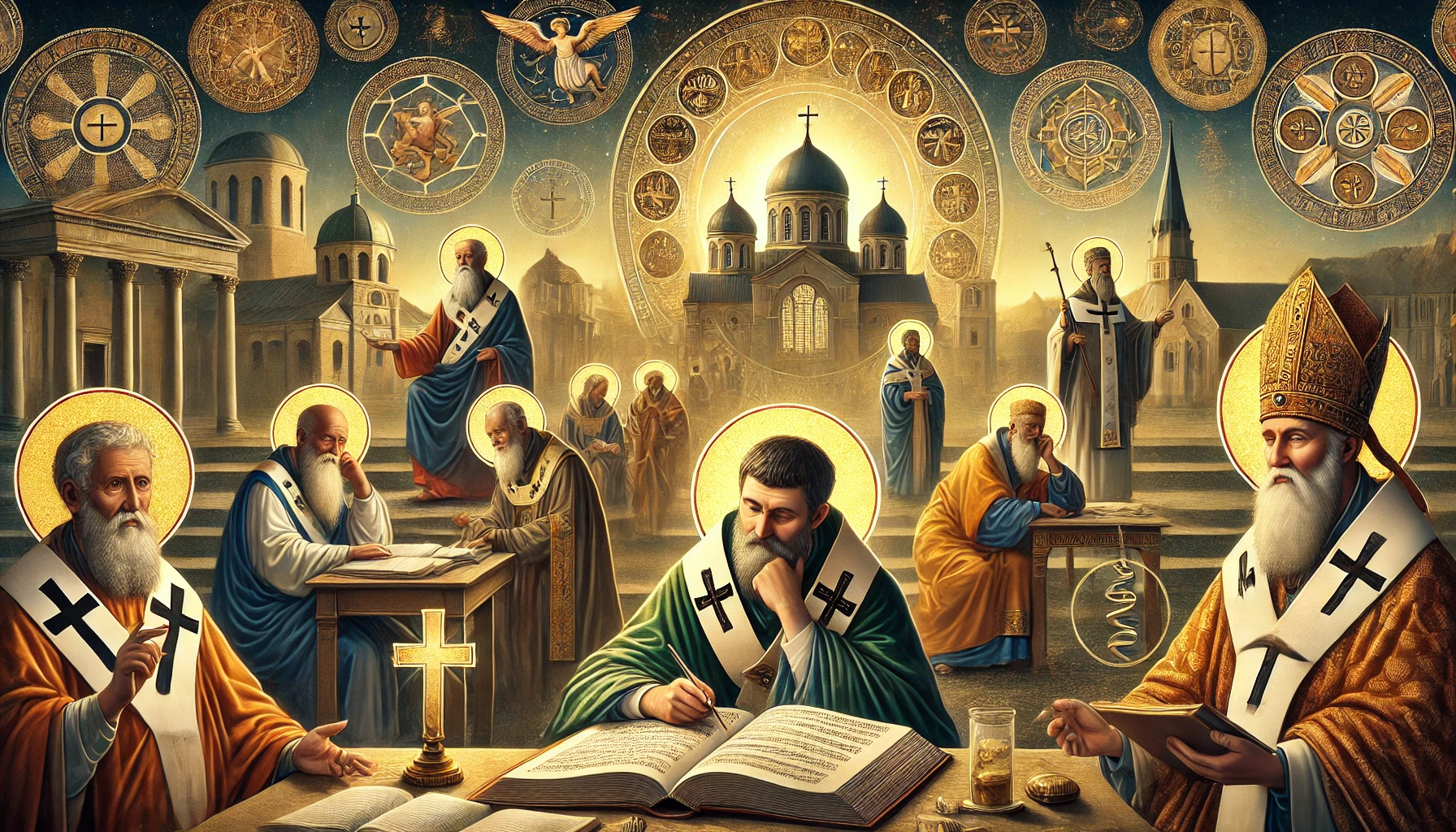
The Legacy of Patristic Thought: Discussion of the Ongoing Influence of Early Church Theology on Contemporary Christianity
Level of Education: Doctoral Degree in Biblical Studies
Purpose
To explore the enduring legacy of patristic thought and its influence on contemporary Christian theology, doctrine, and practice.
Objectives
- Understand the foundational contributions of the Church Fathers to Christian theology.
- Analyze how patristic thought has shaped key aspects of contemporary Christian belief and practice.
- Evaluate the relevance and application of patristic theology in modern Christian contexts.
Key Concepts, Terms, and Keywords
- Patristics: The study of the Church Fathers and their writings.
- Orthodoxy: Adherence to correct or accepted creeds, especially in religion.
- Creeds: Formal statements of Christian beliefs, such as the Nicene Creed.
- Theology: The study of the nature of God and religious belief.
- Liturgy: The form or formulary according to which public religious worship is conducted.
- Ecumenism: The principle or aim of promoting unity among the world’s Christian churches.
Lesson Content
1. Foundational Contributions of the Church Fathers
- Development of Christian Doctrine
- Trinity: Formulation of the doctrine of the Trinity, affirming one God in three persons (Father, Son, and Holy Spirit).
- Example: Athanasius’ defense of the Trinity against Arianism.
- Christology: Understanding of Jesus Christ as both fully God and fully man.
- Example: Council of Chalcedon’s definition of the two natures of Christ.
- Scriptural Basis: John 1:1-14, Matthew 28:19, Colossians 2:9.
- Trinity: Formulation of the doctrine of the Trinity, affirming one God in three persons (Father, Son, and Holy Spirit).
- Formation of Creeds and Councils
- Nicene Creed: Established at the Council of Nicaea (325 AD) to combat Arianism and affirm Christ’s divinity.
- Apostles’ Creed: Summarizes the apostles’ teachings and serves as a baptismal confession.
- Scriptural Basis: Ephesians 4:4-6 – “There is one body and one Spirit… one Lord, one faith, one baptism, one God and Father of all.”
2. Influence on Contemporary Christian Theology
- Doctrinal Orthodoxy
- Continuation of patristic definitions of core doctrines such as the Trinity, Christology, and original sin.
- Example: The Nicene Creed recited in many Christian denominations today.
- Scriptural Basis: Hebrews 13:8 – “Jesus Christ is the same yesterday and today and forever.”
- Liturgical Practices
- Development of liturgical forms and practices rooted in patristic traditions.
- Example: Use of the liturgical calendar, readings from the Church Fathers in liturgical settings.
- Scriptural Basis: Acts 2:42 – “They devoted themselves to the apostles’ teaching and to fellowship, to the breaking of bread and to prayer.”
- Ethical Teachings
- Patristic teachings on morality and ethics continue to influence Christian behavior and social teaching.
- Example: Augustine’s teachings on love and justice, Gregory the Great’s teachings on pastoral care.
- Scriptural Basis: Micah 6:8 – “He has shown you, O mortal, what is good. And what does the Lord require of you? To act justly and to love mercy and to walk humbly with your God.”
3. Relevance and Application of Patristic Theology in Modern Contexts
- Ecumenical Dialogue
- Patristic writings provide common ground for dialogue between different Christian traditions.
- Example: Use of the Nicene Creed in ecumenical discussions.
- Scriptural Basis: John 17:21 – “That all of them may be one, Father, just as you are in me and I am in you.”
- Theological Reflection
- Modern theologians continue to draw on patristic insights for contemporary theological issues.
- Example: Engagement with Augustine’s writings on grace and free will in debates on soteriology.
- Scriptural Basis: Romans 12:2 – “Do not conform to the pattern of this world, but be transformed by the renewing of your mind.”
- Pastoral Practice
- The pastoral writings of the Church Fathers offer guidance for modern pastoral care and church leadership.
- Example: Gregory the Great’s “Pastoral Rule” as a guide for contemporary clergy.
- Scriptural Basis: 1 Peter 5:2-3 – “Be shepherds of God’s flock that is under your care, watching over them—not because you must, but because you are willing, as God wants you to be; not pursuing dishonest gain, but eager to serve.”
King Jesus’ Model/Example
- Matthew 16:18: “And I tell you that you are Peter, and on this rock I will build my church, and the gates of Hades will not overcome it.”
- Explanation: Jesus’ establishment of the Church provides the foundation for the ongoing relevance and application of patristic teachings in building and guiding the Church.
Practical Applications (Bible-Based)
- Doctrine and Worship: Upholding the creeds and teachings of the Church Fathers in contemporary worship and doctrine (2 Timothy 1:13-14).
- Moral and Ethical Guidance: Applying patristic ethical teachings to modern social and moral issues (Micah 6:8).
- Unity and Ecumenism: Promoting unity and dialogue among different Christian traditions through shared patristic heritage (John 17:21).
Exam Questions and Answers
- Question: How did the Church Fathers contribute to the development of the doctrine of the Trinity? Answer: The Church Fathers, such as Athanasius and the Cappadocian Fathers, contributed to the development of the doctrine of the Trinity by articulating the concept of one God in three persons, combating heresies like Arianism, and helping to formulate the Nicene Creed.
- Question: What is the significance of the Nicene Creed in contemporary Christianity? Answer: The Nicene Creed is significant in contemporary Christianity as it provides a foundational statement of Christian faith, affirming the divinity of Jesus Christ and the Trinity. It is recited in many Christian denominations and serves as a unifying confession of faith.
- Question: In what ways do patristic teachings influence modern liturgical practices? Answer: Patristic teachings influence modern liturgical practices through the development of the liturgical calendar, the structure of worship services, the use of creeds, and readings from the Church Fathers. These practices help maintain continuity with early Christian worship.
- Question: How do the ethical teachings of the Church Fathers remain relevant today? Answer: The ethical teachings of the Church Fathers remain relevant today by providing timeless principles of morality, justice, and pastoral care. Figures like Augustine and Gregory the Great offer insights into living a Christian life that addresses contemporary social and ethical issues.
- Question: Explain the role of patristic writings in ecumenical dialogue. Answer: Patristic writings play a crucial role in ecumenical dialogue by offering a shared heritage and common theological foundation for different Christian traditions. They help bridge doctrinal divides and foster unity among diverse Christian communities.
- Question: What impact did Augustine of Hippo have on Christian theology and practice? Answer: Augustine of Hippo had a profound impact on Christian theology and practice through his writings on grace, free will, original sin, and the nature of the Church. His works, such as “Confessions” and “City of God,” continue to influence theological reflection and pastoral practice.
- Question: How can contemporary Christians apply the pastoral teachings of Gregory the Great? Answer: Contemporary Christians can apply Gregory the Great’s pastoral teachings by using his “Pastoral Rule” as a guide for church leadership, emphasizing humility, compassion, and diligent care for the flock, thereby enhancing the effectiveness and faithfulness of pastoral ministry.
- Question: Describe the ongoing influence of patristic thought on contemporary theological debates. Answer: Patristic thought continues to influence contemporary theological debates by providing foundational insights and arguments on key issues such as the nature of Christ, the Trinity, salvation, and the relationship between faith and reason. Modern theologians frequently engage with patristic writings to address current theological questions.
- Question: What lessons can be learned from the ecumenical efforts of the early Church Fathers? Answer: Lessons from the ecumenical efforts of the early Church Fathers include the importance of seeking doctrinal unity, the value of creeds in articulating shared beliefs, and the need for humility and dialogue in resolving theological disputes, all of which are vital for promoting Christian unity today.
- Question: How does the study of patristic exegesis enhance our understanding of scripture? Answer: The study of patristic exegesis enhances our understanding of scripture by revealing the depth and richness of biblical interpretation practiced by the early Church Fathers. Their methods of literal, allegorical, typological, and moral interpretation offer valuable perspectives for contemporary biblical study and application.
Research Citations (MLA Format)
- González, Justo L. The Story of Christianity, Volume 1: The Early Church to the Dawn of the Reformation. HarperOne, 2010. Available in eBook format.
- Pelikan, Jaroslav. The Christian Tradition: A History of the Development of Doctrine, Vol. 1: The Emergence of the Catholic Tradition (100-600). University of Chicago Press, 1975. Available in eBook format.
- Chadwick, Henry. The Early Church. Penguin Books, 1993. Available in eBook format.
- Wilken, Robert Louis. The Spirit of Early Christian Thought: Seeking the Face of God. Yale University Press, 2005. Available in eBook format.
- Ayres, Lewis. Nicaea and Its Legacy: An Approach to Fourth-Century Trinitarian Theology. Oxford University Press, 2006. Available in eBook format.
This lesson provides an in-depth discussion of the legacy of patristic thought and its ongoing influence on contemporary Christianity. It highlights the importance of understanding the contributions of the Church Fathers to appreciate the foundations and development of Christian theology, doctrine, and practice.
Tags: Patristic Thought