Views: 9
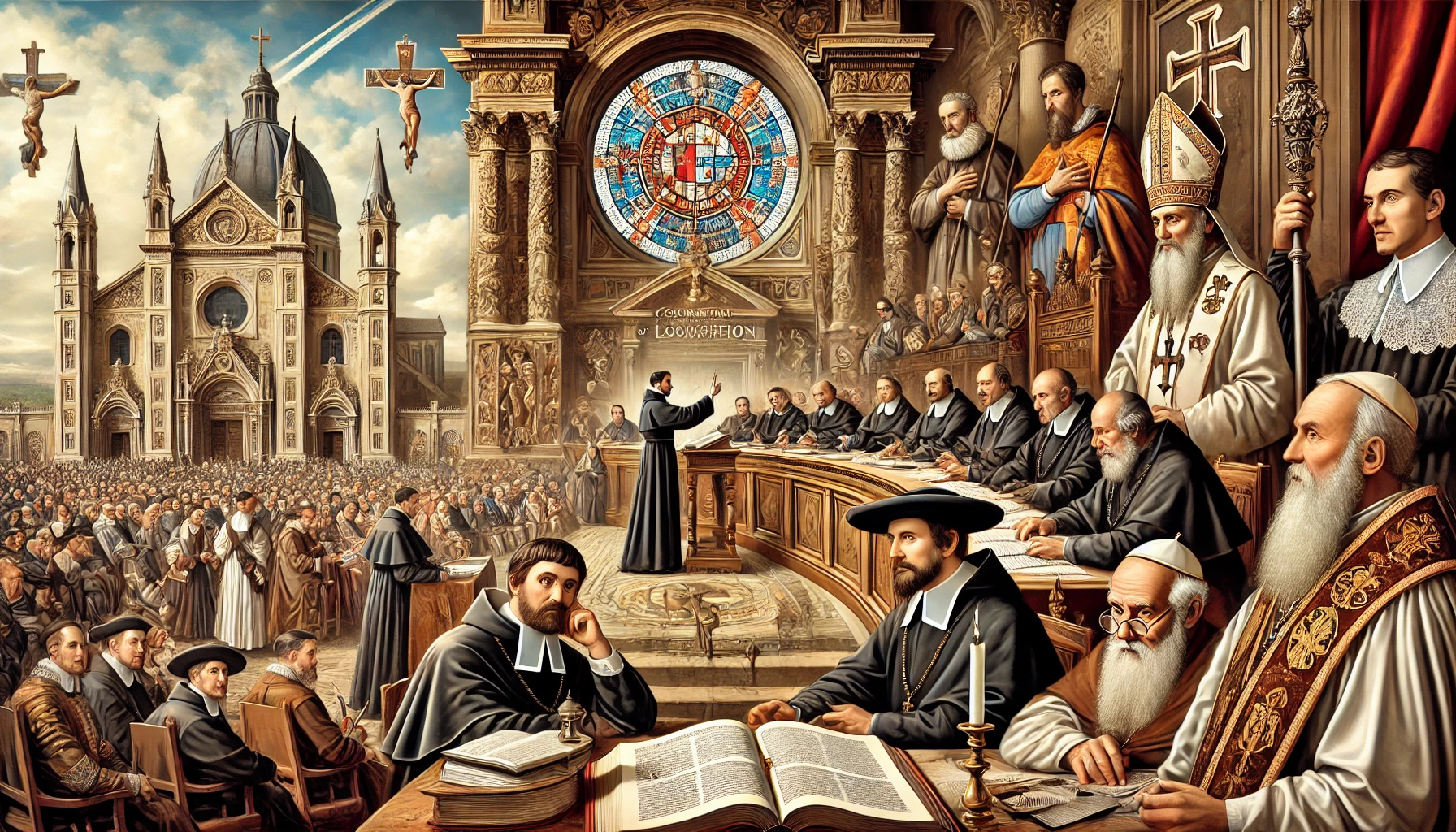
Lesson Title: The Counter-Reformation: Analysis of the Catholic Church’s Response to the Reformation
Level of Education
Doctoral Degree in Biblical Studies
Purpose
To examine the Catholic Church’s response to the Protestant Reformation, focusing on the reforms, key figures, and the impact of the Counter-Reformation.
Objectives
To understand the strategies and measures taken by the Catholic Church to address the challenges posed by the Protestant Reformation and to evaluate the outcomes and legacy of the Counter-Reformation.
Key Concepts, Terms, and Keywords
- Counter-Reformation: The period of Catholic revival beginning with the Council of Trent (1545-1563) and ending with the close of the Thirty Years’ War (1648).
- Council of Trent: A major Catholic council that addressed doctrinal and reform issues, and initiated measures to counteract Protestantism.
- Jesuits: Members of the Society of Jesus, founded by Ignatius of Loyola, who played a significant role in the Counter-Reformation.
- Roman Inquisition: A system of tribunals developed by the Holy See to root out heresy and enforce Catholic doctrine.
- Baroque Art: A style of art that developed as part of the Counter-Reformation, emphasizing emotional involvement and religious themes.
Lesson Content
- Historical Context:
- Pre-Council Challenges: Overview of the Catholic Church’s situation before the Counter-Reformation, including the rise of Protestantism.
- Bible Verses: Matthew 16:18; 1 Corinthians 1:10
- Matthew 16:18 emphasizes the endurance of the Church.
- 1 Corinthians 1:10 calls for unity among believers.
- The Council of Trent:
- Doctrinal Reforms: Clarifications and affirmations of Catholic doctrine, such as the nature of the sacraments, justification, and the role of tradition.
- Bible Verses: 2 Thessalonians 2:15; James 2:24
- 2 Thessalonians 2:15 supports holding to traditions.
- James 2:24 emphasizes justification by works and not by faith alone.
- Bible Verses: 2 Thessalonians 2:15; James 2:24
- Disciplinary Reforms: Measures to address clerical corruption, improve education, and enforce discipline.
- Bible Verses: 1 Timothy 3:1-7; Titus 1:5-9
- 1 Timothy 3:1-7 outlines qualifications for church leaders.
- Titus 1:5-9 emphasizes the importance of moral and doctrinal integrity in leadership.
- Bible Verses: 1 Timothy 3:1-7; Titus 1:5-9
- Doctrinal Reforms: Clarifications and affirmations of Catholic doctrine, such as the nature of the sacraments, justification, and the role of tradition.
- The Jesuits and their Role:
- Founding of the Society of Jesus: Ignatius of Loyola and the establishment of the Jesuits.
- Missionary Work and Education: Expansion of Catholic education and global missionary efforts.
- Bible Verses: Matthew 28:19-20; Acts 1:8
- Matthew 28:19-20 commands making disciples of all nations.
- Acts 1:8 emphasizes being witnesses to the ends of the earth.
- Bible Verses: Matthew 28:19-20; Acts 1:8
- The Roman Inquisition:
- Purpose and Methods: Aimed at combating heresy and enforcing doctrinal conformity.
- Impact and Controversies: Examination of the Inquisition’s effectiveness and the ethical concerns it raised.
- Bible Verses: Galatians 1:6-9; 1 John 4:1
- Galatians 1:6-9 warns against false gospels.
- 1 John 4:1 calls for testing the spirits to see whether they are from God.
- Bible Verses: Galatians 1:6-9; 1 John 4:1
- Baroque Art and Culture:
- Characteristics and Influence: Use of art to inspire faith and convey religious themes.
- Prominent Artists and Works: Examples of Baroque art that reflect Counter-Reformation ideals.
- Bible Verses: Exodus 31:1-5; Psalm 96:9
- Exodus 31:1-5 speaks of God-given artistic skill.
- Psalm 96:9 emphasizes worshiping the Lord in the splendor of holiness.
- Bible Verses: Exodus 31:1-5; Psalm 96:9
- Impact and Legacy:
- Long-term Effects: The strengthening of the Catholic Church, reaffirmation of key doctrines, and lasting cultural contributions.
- Comparative Analysis: Evaluation of the Counter-Reformation’s success in relation to the Protestant Reformation.
- Bible Verses: Ephesians 4:11-13; 2 Timothy 4:2-4
- Ephesians 4:11-13 speaks of building up the body of Christ.
- 2 Timothy 4:2-4 warns against turning away from sound doctrine.
- Bible Verses: Ephesians 4:11-13; 2 Timothy 4:2-4
Exam Questions with Explained Answers
- Question: What were the primary objectives of the Council of Trent?
- Answer: The primary objectives of the Council of Trent were to address doctrinal disputes raised by the Protestant Reformation, implement disciplinary reforms to correct corruption and abuses within the Church, and reaffirm Catholic teachings on key issues such as the sacraments, justification, and the role of tradition.
- Question: How did the Jesuits contribute to the Counter-Reformation?
- Answer: The Jesuits played a crucial role in the Counter-Reformation through their dedication to education, missionary work, and support for Catholic doctrine. They established schools, colleges, and universities, spread Catholicism globally through missions, and provided intellectual and spiritual guidance to counteract Protestant influence.
- Question: Discuss the impact of the Roman Inquisition on the Counter-Reformation.
- Answer: The Roman Inquisition was instrumental in combating heresy and enforcing doctrinal conformity. It investigated and prosecuted individuals accused of heresy, thus preserving Catholic orthodoxy. However, its methods and severity also raised ethical concerns and criticisms, reflecting the complexities of religious authority and control.
- Question: How did Baroque art serve the purposes of the Counter-Reformation?
- Answer: Baroque art, characterized by emotional intensity, dramatic use of light and shadow, and dynamic compositions, served to inspire faith and devotion. It was used by the Catholic Church to convey religious themes, depict the glory of the saints, and promote the beauty of Catholic worship, thus reinforcing Counter-Reformation ideals.
- Question: What were some key doctrinal affirmations made by the Council of Trent?
- Answer: The Council of Trent affirmed several key Catholic doctrines, including the seven sacraments, the real presence of Christ in the Eucharist, the necessity of both faith and works for justification, the authority of Church tradition alongside Scripture, and the veneration of saints and relics.
- Question: Explain the significance of Ignatius of Loyola in the Counter-Reformation.
- Answer: Ignatius of Loyola, the founder of the Society of Jesus (Jesuits), was significant for his role in revitalizing the Catholic Church through education, spiritual renewal, and missionary work. His Spiritual Exercises provided a framework for personal and communal piety, and the Jesuits became a driving force in the Catholic revival.
- Question: How did the Counter-Reformation address clerical corruption and abuses?
- Answer: The Counter-Reformation addressed clerical corruption and abuses through measures such as the establishment of seminaries for the proper training of priests, enforcing stricter discipline among the clergy, regular visitation of dioceses by bishops, and the creation of new religious orders committed to reform and piety.
- Question: In what ways did the Council of Trent respond to Protestant criticisms of Catholic doctrine?
- Answer: The Council of Trent responded to Protestant criticisms by clearly defining and reaffirming Catholic teachings, addressing points of contention such as justification, the role of good works, the authority of the Pope, and the nature of the sacraments. It also implemented reforms to address genuine abuses and improve the moral integrity of the Church.
- Question: How did the Counter-Reformation influence the development of Catholic education?
- Answer: The Counter-Reformation significantly influenced Catholic education by establishing schools, colleges, and universities run by religious orders like the Jesuits. These institutions emphasized rigorous academic standards, theological orthodoxy, and moral education, playing a key role in educating clergy and laity and promoting Catholic doctrine.
- Question: Assess the long-term impact of the Counter-Reformation on the Catholic Church.
- Answer: The long-term impact of the Counter-Reformation on the Catholic Church includes the reaffirmation and clarification of key doctrines, the revitalization of religious life and piety, the establishment of a global missionary presence, and the development of Baroque art and culture. It strengthened the Church’s internal discipline and unity, allowing it to maintain and even expand its influence despite the challenges posed by Protestantism.
Practical Applications
- Church Leadership: Emphasize the importance of doctrinal integrity and moral discipline in church governance.
- Personal Devotion: Encourage personal and communal piety through spiritual exercises and engagement with religious art and culture.
Research Citations
- O’Malley, John W. “Trent: What Happened at the Council.” Harvard University Press, 2013. eBook.
- MacCulloch, Diarmaid. “The Reformation: A History.” Viking, 2003. eBook.
- Wills, Garry. “The Jesuits: A History.” Random House, 2020. eBook.
- Jedin, Hubert. “A History of the Council of Trent.” Thomas Nelson & Sons, 1957. eBook.
- Bailey, Gauvin Alexander. “
Baroque and Rococo.” Phaidon Press, 2012. eBook.
This lesson provides a comprehensive analysis of the Catholic Church’s response to the Protestant Reformation, highlighting the significant reforms, key figures, and lasting impact of the Counter-Reformation.
Tags: Counter-Reformation