
Views: 5
Lesson Title: Contemporary Mission Strategies: Analyzing Modern Approaches to Missions and Evangelism
Purpose:
To understand and evaluate modern strategies for missions and evangelism in a contemporary context.
Objectives:
To explore current methodologies and practices in missions, ensuring alignment with scriptural mandates, Holy Spirit guidance, and Christ-centered principles.
Concepts, Terms, and Keywords Defined:
- Contemporary Missions: Current strategies and practices in spreading the Christian faith globally.
- Evangelism: The spreading of the Christian gospel by public preaching or personal witness.
- Inculturation: Adapting the way Church teachings are presented to different cultures.
- Contextualization: Presenting the gospel in a way that is relevant to different cultural contexts.
- Holistic Mission: Approaches that address both spiritual and physical needs of individuals and communities.
- Digital Evangelism: Using digital tools and platforms to share the gospel and engage in mission work.
- Church Planting: Establishing new, self-sustaining Christian congregations.
- Kingdom of God: The reign and rule of God over all creation, particularly as it is manifested through the church.
- Discipleship: The process of teaching and mentoring believers to follow Jesus.
- Holy Spirit: The third person of the Trinity who empowers and guides believers in their mission work.
Lesson Content:
Scriptural Foundations and Contemporary Practices:
- Biblical Mandate for Modern Missions:
- Matthew 28:18-20 (NIV): “Then Jesus came to them and said, ‘All authority in heaven and on earth has been given to me. Therefore go and make disciples of all nations, baptizing them in the name of the Father and of the Son and of the Holy Spirit, and teaching them to obey everything I have commanded you. And surely I am with you always, to the very end of the age.'”
- Role of the Holy Spirit in Modern Missions:
- Acts 1:8 (NIV): “But you will receive power when the Holy Spirit comes on you; and you will be my witnesses in Jerusalem, and in all Judea and Samaria, and to the ends of the earth.”
- John 14:26 (NIV): “But the Advocate, the Holy Spirit, whom the Father will send in my name, will teach you all things and will remind you of everything I have said to you.”
- Digital Evangelism and Media:
- Romans 10:17 (NIV): “Consequently, faith comes from hearing the message, and the message is heard through the word about Christ.”
- Mark 16:15 (NIV): “He said to them, ‘Go into all the world and preach the gospel to all creation.'”
- Contextualization and Cultural Sensitivity:
- 1 Corinthians 9:22-23 (NIV): “To the weak I became weak, to win the weak. I have become all things to all people so that by all possible means I might save some. I do all this for the sake of the gospel, that I may share in its blessings.”
- Holistic Mission Approaches:
- James 2:14-17 (NIV): “What good is it, my brothers and sisters, if someone claims to have faith but has no deeds? Can such faith save them? Suppose a brother or a sister is without clothes and daily food. If one of you says to them, ‘Go in peace; keep warm and well fed,’ but does nothing about their physical needs, what good is it? In the same way, faith by itself, if it is not accompanied by action, is dead.”
Practical Applications:
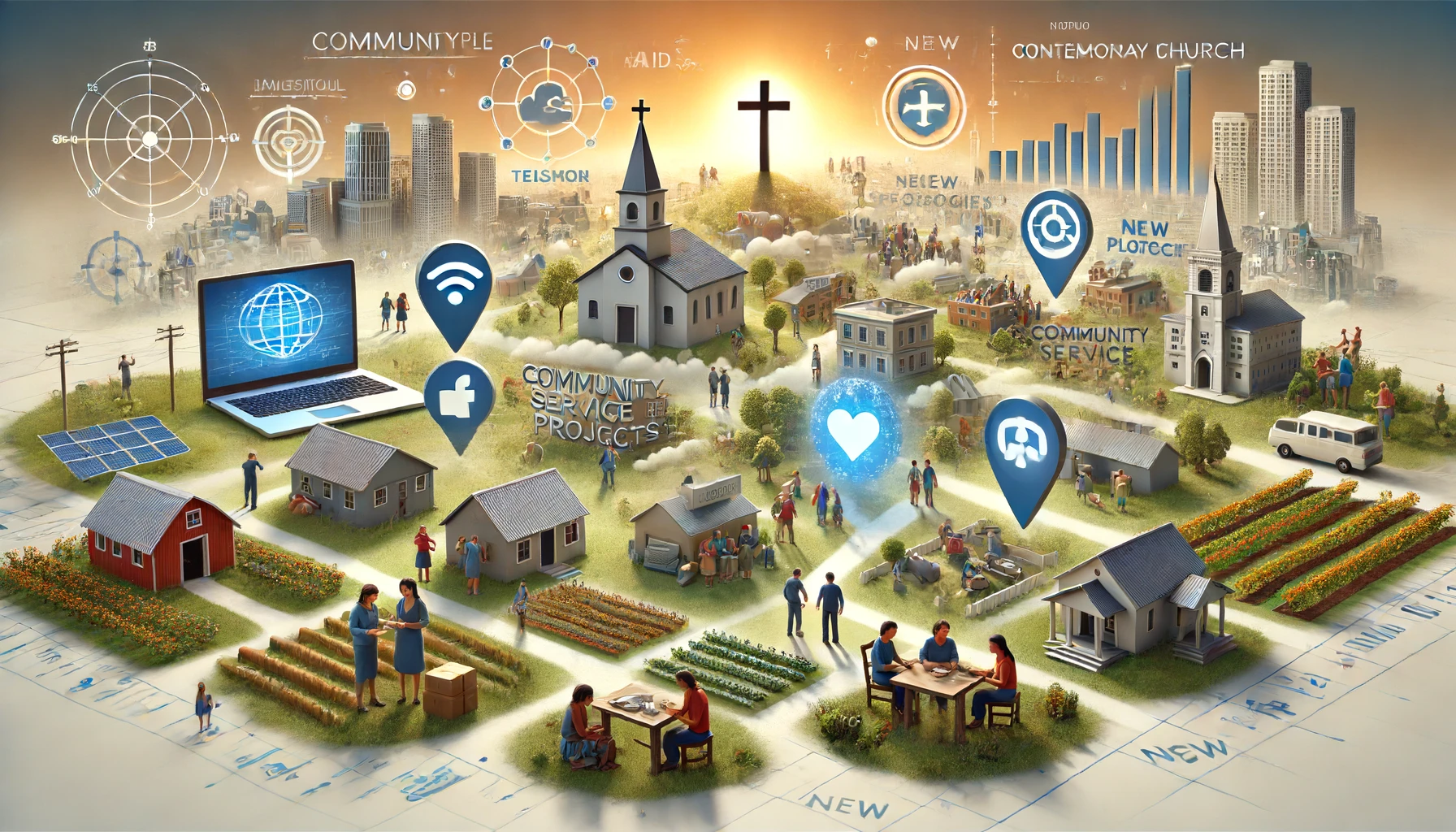
- Digital Evangelism: Utilizing social media, blogs, podcasts, and online platforms to share the gospel and disciple believers.
- Community Development: Engaging in projects that improve the well-being of communities, such as clean water initiatives, education, and healthcare.
- Church Planting: Establishing new churches in unreached or underserved areas, ensuring they are self-sustaining and culturally relevant.
- Training and Equipping: Providing training programs for local leaders and missionaries to effectively share the gospel and lead discipleship initiatives.
- Cultural Adaptation: Learning about and respecting local cultures while presenting the gospel in a way that resonates with the local context.
Exam Questions with Explained Answers:
- What is the Great Commission, and where is it found in the Bible?
- Answer: The Great Commission is Jesus’ command to make disciples of all nations, baptizing them and teaching them to obey his commands. It is found in Matthew 28:18-20.
- How does Acts 1:8 describe the role of the Holy Spirit in missions?
- Answer: Acts 1:8 describes the Holy Spirit as the source of power for believers to be witnesses for Christ in Jerusalem, Judea, Samaria, and to the ends of the earth.
- Define digital evangelism and its significance in contemporary missions.
- Answer: Digital evangelism is the use of digital tools and platforms to share the gospel and engage in mission work. It is significant because it allows for a broader and more immediate reach, especially in a technologically connected world.
- What does 1 Corinthians 9:22-23 teach about contextualization in missions?
- Answer: 1 Corinthians 9:22-23 teaches that becoming all things to all people, adapting to their cultural context, is important for the sake of the gospel to save some. It emphasizes flexibility and cultural sensitivity in mission work.
- Explain the concept of holistic mission approaches with reference to James 2:14-17.
- Answer: Holistic mission approaches address both spiritual and physical needs. James 2:14-17 highlights that faith without action is dead, indicating the necessity of meeting practical needs as part of mission work.
- What role does Romans 10:17 play in digital evangelism strategies?
- Answer: Romans 10:17 emphasizes that faith comes from hearing the message about Christ, underscoring the importance of using various media to ensure that the gospel is heard by a wide audience.
- Discuss the importance of church planting in contemporary missions.
- Answer: Church planting is important because it establishes new, self-sustaining Christian communities that can continue the work of evangelism and discipleship in local contexts.
- How can missionaries ensure cultural sensitivity while sharing the gospel?
- Answer: Missionaries can ensure cultural sensitivity by learning about local customs, languages, and perspectives, and by presenting the gospel in a way that respects and resonates with the local culture.
- What practical steps can be taken to integrate community development with mission work?
- Answer: Practical steps include partnering with local organizations, addressing basic needs like clean water, education, and healthcare, and involving local leaders in planning and implementation.
- Why is training and equipping local leaders crucial for mission success?
- Answer: Training and equipping local leaders is crucial because they understand the cultural context better, can sustain the mission work long-term, and can disciple others more effectively within their communities.
Research Citations (MLA Format):
- Newbigin, Lesslie. The Gospel in a Pluralist Society. Wm. B. Eerdmans Publishing Co., 1989. eBook.
- Bosch, David J. Transforming Mission: Paradigm Shifts in Theology of Mission. Orbis Books, 2011. eBook.
- Green, Michael. Evangelism in the Early Church. Wm. B. Eerdmans Publishing Co., 2003. eBook.
- Frost, Michael, and Alan Hirsch. The Shaping of Things to Come: Innovation and Mission for the 21st-Century Church. Baker Books, 2013. eBook.
- Wright, Christopher J.H. The Mission of God: Unlocking the Bible’s Grand Narrative. InterVarsity Press, 2006. eBook.
This comprehensive lesson provides a detailed analysis of contemporary mission strategies, ensuring alignment with scriptural principles and practical application for modern mission work.