
Views: 7
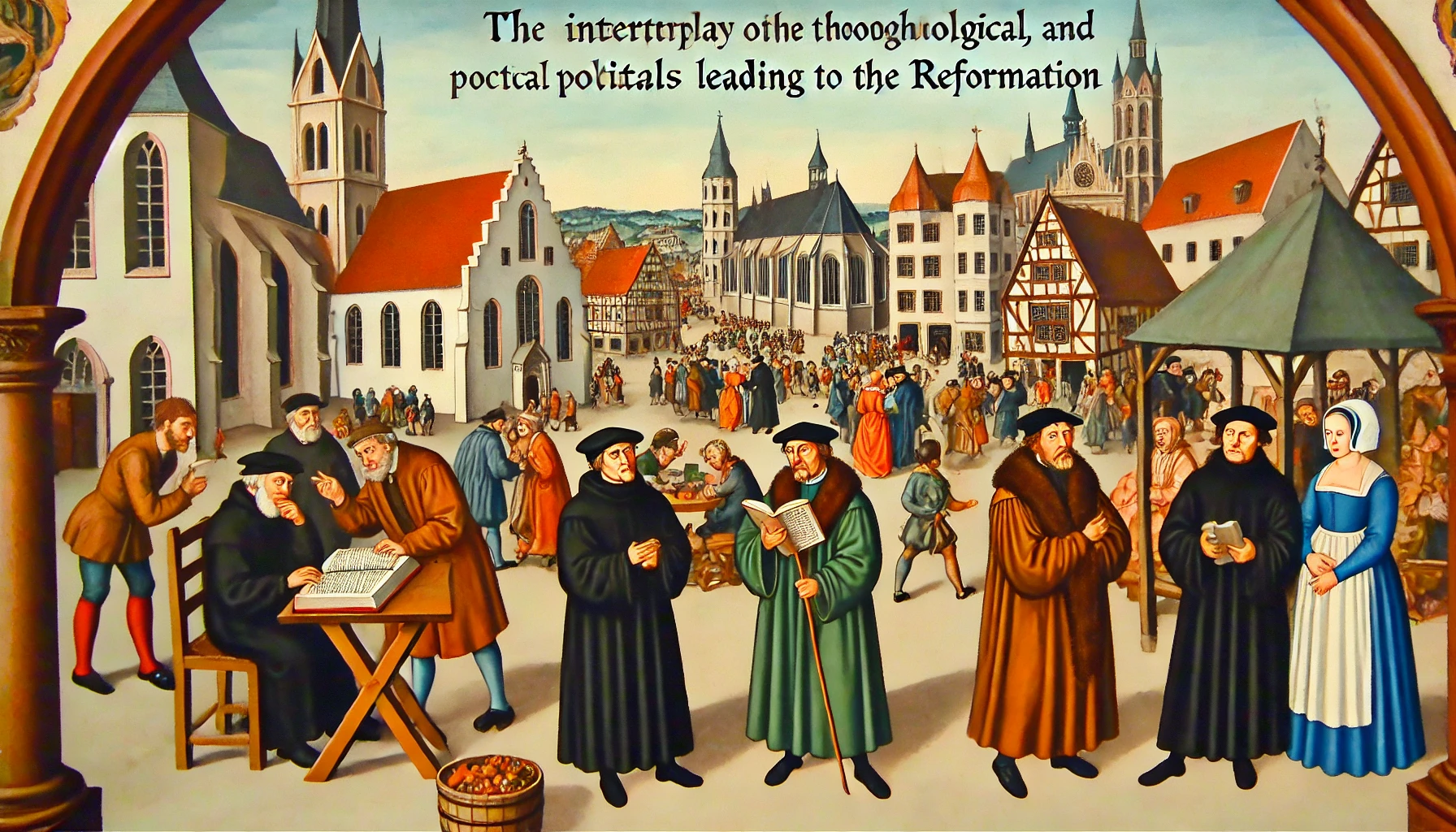
Lesson Title: Causes of the Reformation: Examination of the Theological, Social, and Political Factors Leading to the Reformation
Level of Education
Doctoral Degree in Biblical Studies
Purpose
To dissect the complex interplay of theological, social, and political elements that catalyzed the Protestant Reformation.
Objectives
To identify and analyze the multifaceted causes of the Reformation, understanding how these influenced and precipitated shifts in Christian theology and ecclesiastical structures.
Key Concepts, Terms, and Keywords
- Indulgences: Payments made to the Church that were believed to reduce punishment for sins.
- Papal Authority: The central role and influence of the Pope in the Christian world.
- Secularism: The movement towards separation of religion from civic affairs and governmental functions.
- Humanism: A Renaissance movement that emphasized the value and agency of human beings, typically preferring critical thinking and evidence over acceptance of dogma or superstition.
- Clerical Corruption: The moral and financial corruption within the Church hierarchy that undermined its spiritual authority.
Lesson Content
- Theological Causes:
- Scriptural Misinterpretations and Doctrinal Disputes: Analysis of how divergences in biblical interpretation, especially concerning salvation and indulgences, fueled reformist sentiments.
- Bible Verses: Matthew 23:25-28; Ephesians 2:8-9
- Matthew 23:25-28 criticizes religious hypocrisy, aligning with reformist critiques of clerical abuses.
- Ephesians 2:8-9 emphasizes salvation by grace through faith, countering the Church’s teaching on works and indulgences.
- Social Causes:
- Rise of Humanism: Discussion of how the humanist emphasis on individual scripture interpretation and rationality supported a shift away from dogmatic adherence to Church doctrines.
- Bible Verses: Acts 17:11; 1 Thessalonians 5:21
- Acts 17:11 praises the Bereans for examining the Scriptures themselves, resonating with humanist principles.
- 1 Thessalonians 5:21 encourages testing everything, supporting critical examination of religious teachings.
- Political Causes:
- Growing Secular Power and Nationalism: Examination of how emerging nation-states and secular rulers began to challenge the Church’s authority, seeking to diminish its influence in political affairs.
- Bible Verses: Romans 13:1-7
- Romans 13:1-7 discusses the role of governing authorities, which Reformers used to argue for the separation of church and state power.
- Economic Causes:
- Wealth of the Church and Economic Resentment: Exploration of how the wealth accumulated by the Church and the economic burdens imposed on the laity led to widespread resentment and calls for reform.
- Bible Verses: 1 Timothy 6:10; James 5:1-6
- 1 Timothy 6:10 warns against the love of money, critiquing the Church’s financial excesses.
- James 5:1-6 condemns the rich who exploit others, mirroring criticisms of the Church’s economic practices.
- Clerical Corruption:
- Moral and Financial Corruption: Discussion on the extent of corruption within the Church, including the sale of church offices and indulgences.
- Bible Verses: 1 Peter 5:2-3; Titus 1:7
- 1 Peter 5:2-3 urges shepherds of the Church to be examples to the flock, highlighting the disparity between biblical leadership and corrupt clerical practices.
- Titus 1:7 demands blamelessness in church leaders, reinforcing reformist calls for moral integrity.
Exam Questions with Explained Answers
- Question: How did humanism influence theological thought leading to the Reformation?
- Answer: Humanism promoted a return to original sources, including the Bible, encouraging a critical approach to scripture that often contradicted the Church’s interpretations. This shift empowered individuals to question and interpret religious texts independently.
- Question: Analyze the impact of political changes on the authority of the Church using Romans 13:1-7.
- Answer: Romans 13:1-7, which discusses the role of government, was used to justify the authority of secular rulers over religious institutions, encouraging a reduction of papal influence in political matters.
- Question: Explain the role of indulgences in sparking the Reformation, with reference to Ephesians 2:8-9.
- Answer: Indulgences, which were seen as a way to buy salvation, directly contradicted Ephesians 2:8-9, which states that salvation is by grace through faith, not by works. This theological conflict was central to Martin Luther’s criticisms and the broader Reformation movement.
- Question: Discuss how Acts 17:11 supported the reformist view on scripture interpretation.
- Answer: Acts 17:11 praises the Bereans for examining the Scriptures themselves to verify Paul’s teachings. This approach aligned with the reformist emphasis on personal Bible study and interpretation, countering the Church’s control over scriptural understanding.
- Question: How did clerical corruption contribute to the Reformation, based on 1 Peter 5:2-3?
- Answer: Clerical corruption, including the sale of indulgences and church offices, was in stark contrast to 1 Peter 5:2-3, which calls for church leaders to be examples to their flock and serve willingly. This moral disparity fueled calls for reform.
- Question: What economic factors led to resentment against the Church, according to James 5:1-6?
- Answer: James 5:1-6 condemns the rich who exploit others, which resonated with the public’s resentment towards the Church’s wealth and exploitation through heavy taxation and the sale of indulgences. This economic exploitation was a significant factor in the demand for reform.
- Question: Explain how nationalism influenced the Reformation, with reference to Romans 13:1-7.
- Answer: Nationalism, driven by emerging nation-states, sought to diminish the Pope’s influence and control within their territories. Romans 13:1-7’s discussion on the role of governing authorities provided a biblical justification for these political changes, supporting the move towards national churches.
- Question: How did Matthew 23:25-28 reflect reformist criticisms of the Church?
- Answer: Matthew 23:25-28 criticizes religious leaders for their hypocrisy and outward shows of piety while being inwardly corrupt. This passage was used by Reformers to highlight and condemn the moral and spiritual corruption within the Church’s leadership.
- Question: Analyze the role of secularism in the Reformation with reference to 1 Thessalonians 5:21.
- Answer: Secularism promoted the separation of church and state, encouraging a more rational and evidence-based approach to life and governance. 1 Thessalonians 5:21, which urges believers to test everything and hold on to what is good, supported this critical examination of church authority and practices.
- Question: What was the significance of 1 Timothy 6:10 in critiquing the Church’s economic practices?
- Answer: 1 Timothy 6:10 warns that the love of money is the root of all kinds of evil, directly criticizing the Church’s accumulation of wealth and the practice of selling indulgences. This biblical critique resonated with widespread resentment towards the Church’s economic exploitation.
Practical Applications
- Academic Research: Stimulate further research into the historical contexts that shaped religious movements.
- Church Policy: Encourage transparency and adherence to scriptural principles in church governance.
Research Citations
- Oberman, Heiko. “Luther: Man Between God and the Devil.” Yale University Press, 1989. eBook.
- Pelikan, Jaroslav. “The Christian Tradition: A History of the Development of Doctrine.” University of Chicago Press, 1975. eBook.
- MacCulloch, Diarmaid. “The Reformation.” Viking, 2003. eBook.
- Dickens, A.G. “The English Reformation.” Batsford, 1964. eBook.
- Gonzalez, Justo L. “The Story of Christianity, Volume II: The Reformation to the Present Day.” HarperOne, 1985. eBook.
This lesson provides a thorough examination of the various causes of the Reformation, integrating scriptural analysis with historical context to enhance understanding.





![Joseph’s Rise to Power [Genesis 39:1-41:57]](https://kingj.tv/wp-content/uploads/2024/04/Josephs-rise-to-power-from-Genesis-39_1-41_57-120x86.webp)